
.svg)
Cable as “the New Copper” — Or Just the Industry That Vacated the Home?
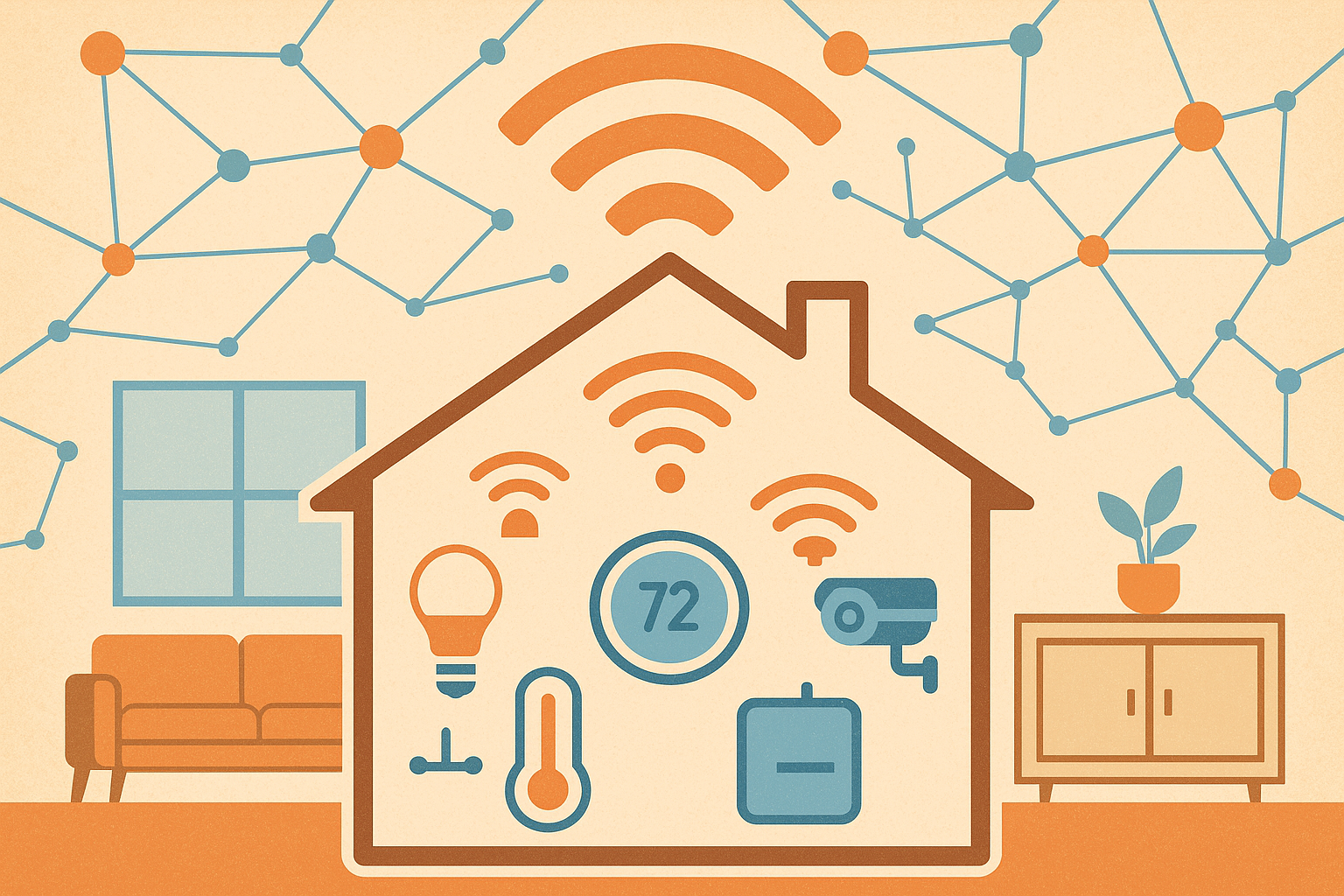
A counterpoint to Light Reading’s “Ouch. Broadband study casts cable as 'the new copper”
Light Reading’s analysis of New Street Research’s report captures the anxiety permeating the sector: slowing broadband growth, fiber and FWA eating share, and investor sentiment turning bearish on HFC economics. The headline — “cable as the new copper” — hits because it fits the current narrative: legacy infrastructure falling behind newer, cleaner, faster alternatives.
But there’s a deeper issue the article never touches:
The broadband industry didn’t just lose ground at the curb. It forfeited the entire inside-the-home ecosystem.
Amazon, Google, and Apple built the de facto “home OS” while cable and regional ISPs narrowed themselves to bandwidth delivery. You can’t claim strategic relevance when you voluntarily walk away from the part of the value chain where consumers actually live.
That — not DOCSIS timelines or FWA promos — is the real reason cable looks like the next “copper.”
What the Article Gets Right — and the Part It Doesn’t Even Attempt to Address
Light Reading is right about the pressures:
- Broadband net adds are flattening.
- Fiber overbuilds are structurally shifting perception.
- FWA is winning on simplicity and price.
- HFC is increasingly seen as a stopgap, not a future-proof asset.
But these are all observations about access.
The article assumes that the battle for the future of broadband is determined by plant technology. That’s a 2010 view of the world. In 2025, the battleground has moved.
The real choke point isn’t the drop line — it’s the lived experience inside the home, where operators are effectively absent.
The Home Became the Platform. Telcos Just Didn’t Notice.
Over the past decade, three companies — Amazon, Google, and Apple — quietly built an entirely new category: the digital operating system of the home.
They own:
- The interface
- The automations
- The sensors
- The behavioral data
- The daily interaction loop
- And crucially, the customer’s mental model of “who powers my home.”
Broadband providers aren't “struggling” in this environment — they’re invisible in it.
They don’t participate in automation, sensing, monitoring, or decision-making. They don’t orchestrate devices. They don’t manage risk. They don’t shape the in-home experience at all.
Most operators’ smart-home strategy begins and ends with “managed Wi-Fi.”
That’s not a service platform. It’s table stakes.
Meanwhile consumers face rising complexity — dozens of devices, fragmented ecosystems, no coherence, and real cost barriers.
This was the industry’s opening. And the industry walked past it.
The Missed Economic Point: The Home Is the Only Place Left to Create Margin
The access layer has collapsed into commodity economics:
- Price compression
- Promotional churn
- Speed parity
- Overbuild pressure
- Regulatory scrutiny
Trying to regain margin through “mobile expansion” is fantasy. That market is oversaturated, low-margin, and dominated by national carriers with deeper pockets, lower cost structures, and better scale economics.
The only frontier where operators have a real structural opportunity is the one they’ve ignored:
the in-home service layer.
A platform that orchestrates devices, detects issues, sends proactive alerts, automates energy use, handles leak or freeze events, and supports aging-in-place isn’t a gadget — it’s a daily-use service. It creates stickiness, loyalty, and recurring revenue that has nothing to do with megabits.
This reframes the entire conversation away from “is HFC the new copper?” to:
Do operators want to remain a utility, or do they want to own the digital home?
The Strategic Pivot: From Bandwidth Provider to In-Home Participant
Here’s the crux: operators don’t lose because of HFC. They lose because they’ve positioned themselves at the least defensible layer of the stack.
What changes the economics isn’t plant upgrades — it’s presence inside the home’s digital core.
A modern residential gateway that can serve as a true automation hub — multiradio, protocol-agnostic, telco-managed — becomes a foundation for operators to re-enter the part of the value chain they abandoned. A curated hardware catalog solves the consumer confusion that big-tech ecosystems never actually fixed. Financing models solve the financial barrier that keeps households from adopting meaningful smart-home setups.
This is not about gadgets.
This is about regaining strategic adjacency to the customer’s daily life.
That adjacency is what drives:
- Higher ARPU
- Lower churn
- Better NPS
- More durable investor narratives
It’s what turns a “melting ice cube” asset into a platform investors can underwrite.
A Practical Path — Not a Moonshot
Operators don’t need to reinvent their entire business overnight. A rational approach looks like:
- Start with a controlled pilot in one market.
- Offer the in-home platform as a value-added bundle with mid/high-tier speeds.
- Measure ARPU uplift, churn reduction, and support-call reduction.
- Expand once repeatability is proven.
The operators that approach this as an infrastructure project will fail.
The operators that approach it as a service business transformation will win.
Cable Isn’t the New Copper — It’s the Industry That Forgot the Home
If operators insist on thinking like access providers, Light Reading is right — the story ends with declining margins, shrinking share, and investor fatigue.
But if they re-enter the home with a real platform — not a hobbyist system, not a Wi-Fi tweak, but a true service layer — then the narrative shifts.
The home is the strategic frontier.
The platform is the differentiator.
And the operators who seize it aren’t the new copper — they’re the new in-home utility.
.svg)
.svg)
.svg)
Related Blogs
.svg)



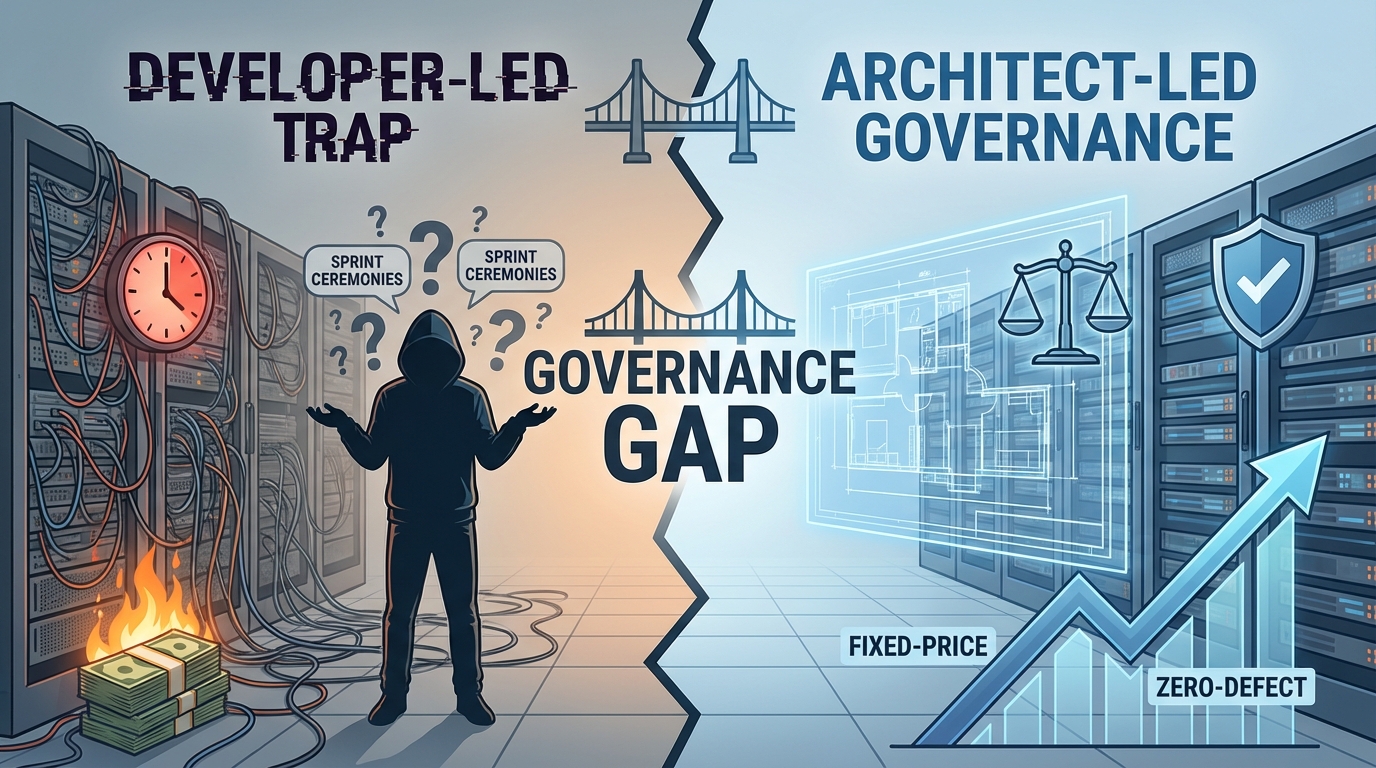

Unlike traditional consultancies, our model is architect-led, fixed-price, and outcome-driven.


Technology That Moves You Forward.
Partner with expert engineers who deliver measurable outcomes.
.svg)
.svg)